October 13, 2026
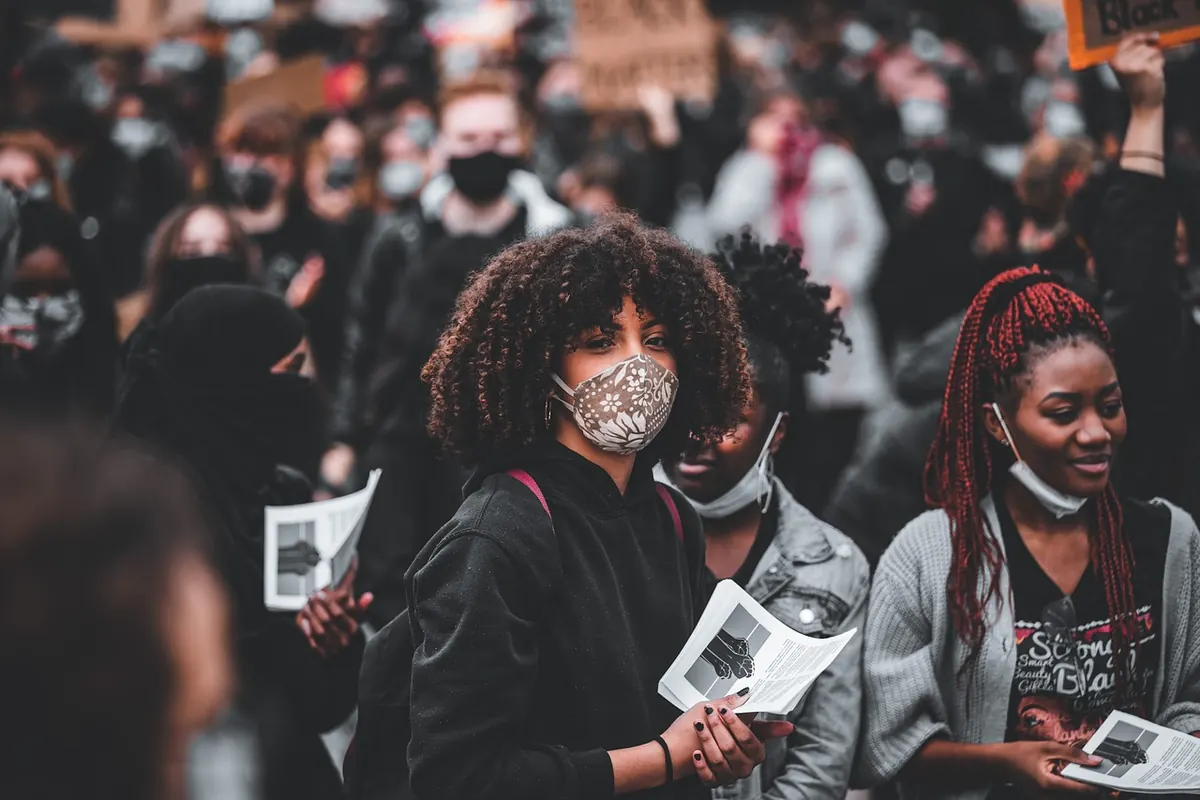
Forty seconds of footage lands in your feed: a line of police, a crowd pressing forward, someone shouting in a language you don't speak. The caption says it was filmed this morning in a city three countries away. Within the hour it has been shared tens of thousands of times, and someone has already attached a claim of their own to it. If you write or edit news, your job is to establish what the clip actually shows before you pass it on. There is no single trick that does this. There is a routine — five steps, worked in order, each narrowing the possibilities until what remains is either evidence or a clear statement of what you could not confirm.
Step One: Save the File Before You Analyze Anything
Videos disappear. Accounts get suspended, posters delete, platforms take clips down during breaking news. Before you start looking at content, capture the container: the full URL, the account handle, the time you saw it, the view count at that moment. Download the file where the platform allows it; where it doesn't, screen-record the whole page, caption included.
Then look at what you have. Is this account the original poster, or a reposter? Reposts usually strip credit, and many carry the watermark of a stitching or editing app, or a fragment of another outlet's logo at the edge of the frame. Cropping matters: a clip trimmed to remove a corner may be trimming away a street sign that would settle the question of where it was filmed.
Sound deserves its own warning. Protest footage very often circulates with music or a voiceover laid over the original audio, or with the audio removed entirely. Treat a soundtrack as commentary, not evidence. The same goes for the caption: text travels separately from video and is rewritten at every hop.
Step Two: Run the Frames Backwards
This is the reverse image search, and it is still the fastest way to kill a bad clip. Pause the video at three or four moments and take clean screenshots, avoiding overlaid text where you can. Then crop each screenshot down to the most distinctive detail: a shop sign, a uniform patch, an unusual vehicle, the corner of a building. Searching a tight crop almost always beats searching the whole frame, because the whole frame is mostly people.
Run the crops through more than one engine. Google Lens is the default; Yandex often performs better on locations and signage in Eastern Europe and Central Asia; TinEye will list earlier copies and let you sort by date, which is what you actually want. Two adjustments catch a lot of reposts: flip the image horizontally, since many clips are mirrored to dodge detection, and try the uncropped frame as well as the crop.
Read the result as a date question. If the earliest copy you can find predates the event the clip is said to show, you are finished — it is recycled footage, and the most common form of viral protest video is a real protest from somewhere else, or from another year.
Step Three: Put the Camera on a Map
Geolocation is slower, and it is what separates a guess from a confirmation. Start with the things a place gives away without meaning to: the language on shopfronts, the format of licence plates, which side of the road traffic uses, police uniforms and vehicle livery, road markings, bollards, the shape of balconies, the vegetation.
- Match at least two independent features before you commit. One sign can be a coincidence; a sign plus a distinctive rooftop is much harder to fake.
- Use satellite and street-level imagery together. Where street-level coverage is thin, terrain and building footprints can still rule a location in or out.
- Check the geometry of the crowd against open space visible from above — a wide square, a bridge, a road junction narrows the search fast.
- Track shadow direction and length. Sun-position tools will tell you whether the shadows in the frame are consistent with that place on that date at that hour. Overcast skies and tall buildings make this less reliable, so treat it as supporting evidence.
Step Four: Test the Clock
Time is where confident clips usually fall apart. Some files carry capture data in their metadata; many platforms strip it on upload, so its absence means nothing either way — it is a dead end, not a red flag. Timestamps burned into CCTV-style footage can be edited. Treat both as leads to be corroborated, not answers.
Look for time written into the scene instead. Weather archives from national meteorological services, or historical weather records kept by general reference sites, will tell you whether it was raining, snowing or clear in that city on that day. Clothing and trees do the rest: winter coats in August, bare branches in spring, election posters for a vote that has already happened, scaffolding on a landmark whose repairs you can date.
Then place the clip on a timeline of the event itself. What time did the gathering start, when did police deploy, when did it get dark? A clip filmed at dusk in a city where sunset was three hours earlier than the caption implies is a clip that needs explaining.
Step Five: Find the Person Who Filmed It
Sooner or later you need a human. Find the earliest upload rather than the biggest repost, then read the account: when was it created, what else does it post, does anything on it place the person in that city? Send a short, polite message. Say who you are, say what you are trying to establish, and ask open questions — where were you standing, what happened just before the clip starts, do you have the original file still on your phone.
Ask for something only a person who was there could supply: what happened after the camera stopped, what the street smelled like, who was standing next to them. This is a conversation, not an interrogation, and people can tell the difference. Voice notes, an original file with intact metadata, or a screenshot of the camera roll will do more than any amount of insistence.
Ask permission before naming anyone, and ask whether publication would put them at risk. Local journalists, fixers and rights-monitoring groups working in the city are the other half of this step: they can confirm whether a demonstration happened at all, roughly how large it was, and whether the scene in the clip looks like the place it claims to be.
Read the Whole Frame
A clip is a crop in time as well as in space. What happened thirty seconds earlier, and thirty seconds later? Footage that begins with a charge and ends before the retreat tells a different story than the full sequence. Look for other angles of the same moment from different uploaders — three unrelated cameras pointing at the same corner is strong corroboration, and a single camera with no siblings is worth flagging as such. Compare against wire service reporting and local outlets before you accept a crowd size or a casualty claim, and be careful with numbers that appear only in captions.
A Checklist for the Moment Before You Share
Six questions, answered honestly, will cover most of it: Do I know where this was filmed, and can I show the match? Do I know when, from something other than the caption? Have I found the earliest upload and spoken to whoever posted it? Have I checked whether earlier copies exist? Have I seen another angle? And what, precisely, do I still not know?
If the answers are thin, say so in the copy. "The footage appears to show" and "it has not been possible to verify when this was filmed" are not hedges to be embarrassed about — they are accurate sentences, and readers recognise them as care. The one thing to avoid is amplifying on the grounds that you flagged it as unverified: sharing reaches the same audience either way. Wait, keep asking, and publish when the file has earned it.
Photo: justifotka / Pixabay